guide
Castle Hill: What Is Worth Your Time
Castle Hill takes two hours or it takes a day, and most visitors spend both on the same two hundred metres. What charges, what does not, what is a 1950s reconstruction, and the back streets where the hill stops being a monument.
Three ways up, and the one people miss
The funicular (Budavári Sikló) from Clark Ádám tér is 95 seconds long, costs several times a bus ticket, and usually has a queue. It is a lovely piece of 1870 engineering and a bad way to get up the hill if you are in a hurry.
Bus 16 from Deák Ferenc tér costs a normal ticket, takes no longer, and drops you at the top with no queue. This is the answer for most people.
On foot up the stairs beside the funicular is about fifteen minutes and steeper than it looks from the bottom.
The one nobody uses: the Várkert Bazár at the southern end of the hill has escalators and a lift, set in restored 19th-century garden terraces. Free, almost empty, and it puts you into the castle grounds from below.
Fisherman’s Bastion: what actually costs money
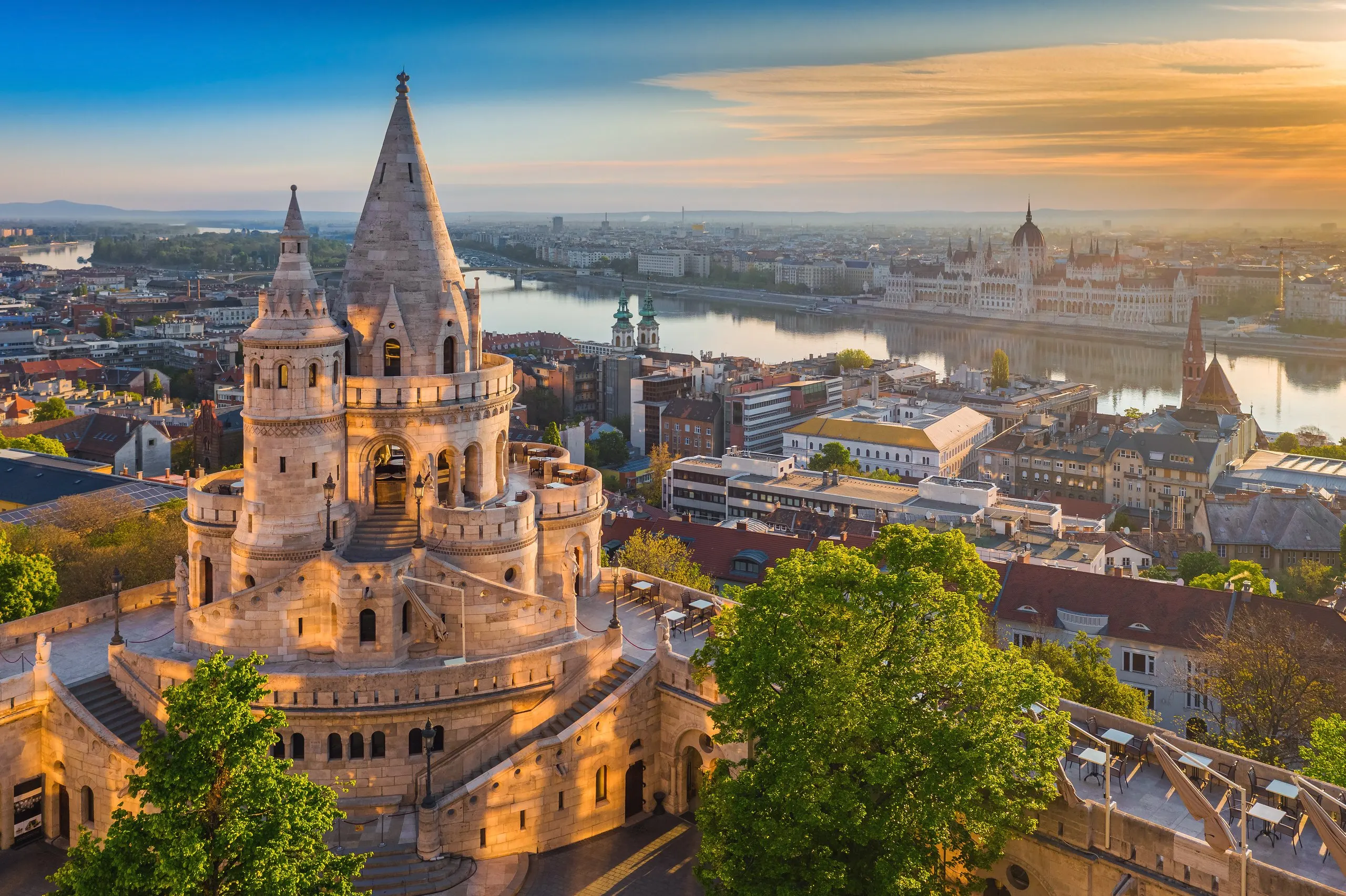
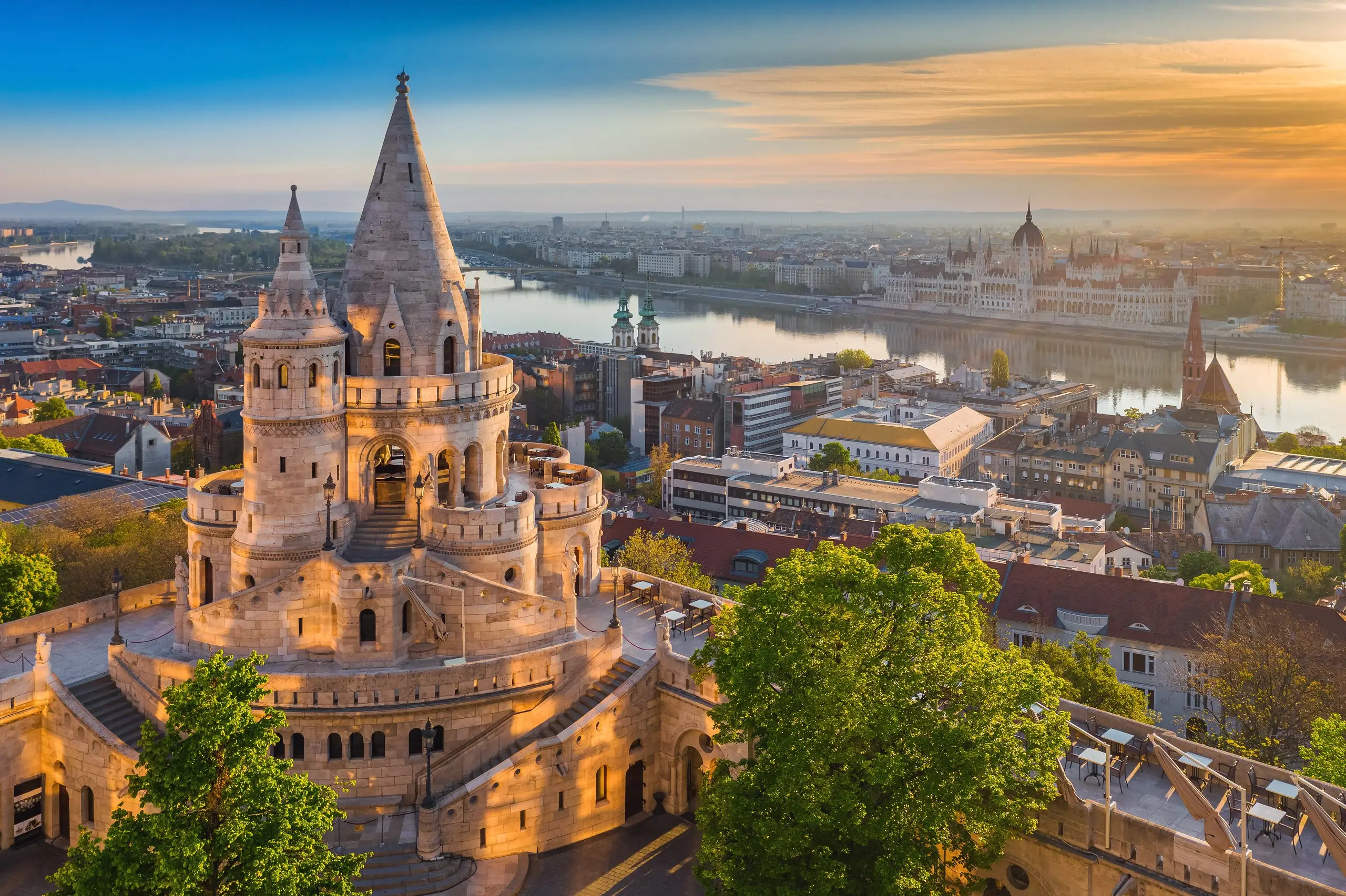
Built 1895–1902 by Frigyes Schulek, and never a fortification — it is a viewing terrace dressed as one. The seven turrets are the seven Magyar tribes who arrived in 896.
The part visitors get wrong: the lower terraces are free, always. Only the upper towers charge, and only during daytime hours in season. Early in the morning and in the evening the whole thing is open and free.
If there is a queue for the upper level, skip it. The view from the free terraces is the same view from four metres lower.
Matthias Church
Properly the Church of the Assumption; everyone calls it Matthias after King Matthias Corvinus, who was married here twice. The Zsolnay tiled roof is the photograph, and it is a 19th-century addition — Schulek again, rebuilding what centuries of siege and an Ottoman conversion to a mosque had left.
Inside is the surprise. It is painted, wall to ceiling, in a way no other church in the city is: Lotz and Székely, dense pattern, closer to an Orientalist interior than a Gothic one. Entry is ticketed and worth it.
The last two Habsburg coronations happened here — Franz Joseph in 1867 and Charles IV in 1916, two years before the empire ended.
Buda Castle, and an honest word about it
The palace you are looking at is largely a post-war reconstruction. The building was gutted in the 1944–45 siege and rebuilt through the 1950s and 60s in a simplified form, so the exterior reads as a royal palace and the interior is a museum built inside a shell.
That does not make it not worth visiting — it makes it worth visiting for the right reason:
- Hungarian National Gallery, in the palace, for Hungarian painting you will not see anywhere else. Closed Mondays.
- Budapest History Museum, for the medieval palace remains underneath the reconstruction, which are real.
If you have two hours on the hill and no more, neither is the right call. Walk instead.
The streets nobody walks
Almost all the crowding on Castle Hill happens on a single axis between the funicular, the church and the Bastion. Two streets back it empties completely.
- Országház utca and Fortuna utca — medieval street plan, Gothic doorway niches still visible in the entrances.
- Tóth Árpád promenade, along the western wall, with a view over the Buda hills and almost nobody on it.
- Vienna Gate (Bécsi kapu) at the north end, and the quiet square behind it.
The one indoor thing worth booking
The Hospital in the Rock (Sziklakórház), in the caves under the hill: a WWII emergency hospital and later a nuclear bunker, preserved and shown by guided tour only. It is genuinely good and it is nothing like the rest of the hill.
Book ahead, and note that it is cold down there in any season.
How long it really takes
- Two hours: Bastion, church exterior, the back streets. Enough.
- Half a day: add the church interior and the Hospital in the Rock.
- A full day: add the National Gallery, and accept that you are doing an art museum, not a castle.
Our Castle District walk is four hours and covers the hill with the back streets included, which is the part that does not photograph and is the part people remember.
Related tours
Would you rather someone local showed you?
Every tour we run is private, and the price is for the group.