practical
Szentendre From Budapest by HÉV
Szentendre is forty minutes from Batthyány tér on the HÉV, and the ticket is not quite the one you think. A Serbian Orthodox town on the Danube that empties completely if you go early or late — and is unbearable at one in the afternoon in July.
The train, and the ticket that catches people
The HÉV suburban railway, line H5, runs from Batthyány tér on the Buda side — which is on metro M2 and directly across the river from the Parliament — to Szentendre in about forty minutes. Trains are frequent.
Here is the part that catches people out: Szentendre is outside the Budapest city boundary. A normal city ticket or travelcard covers you only as far as the boundary at Békásmegyer. Beyond it you need a supplementary ticket for the remaining section.
Buy both before you board. Inspectors check this line, and “I had a travelcard” is not an argument that works.
Why a Hungarian town on the Danube is Serbian
This is the thing that makes Szentendre more than a pretty street.
In the late 17th century, as the Ottoman frontier moved, Serbian and other Balkan Orthodox communities fled north and a large group settled here. They brought their church, their trade routes and their money, and they built.
The result is a Hungarian town with Serbian Orthodox churches in it — Blagoveštenska on the main square, the Belgrade Cathedral up the hill behind it — ornate, iconostasis- heavy, and completely unlike anything else within an hour of Budapest.
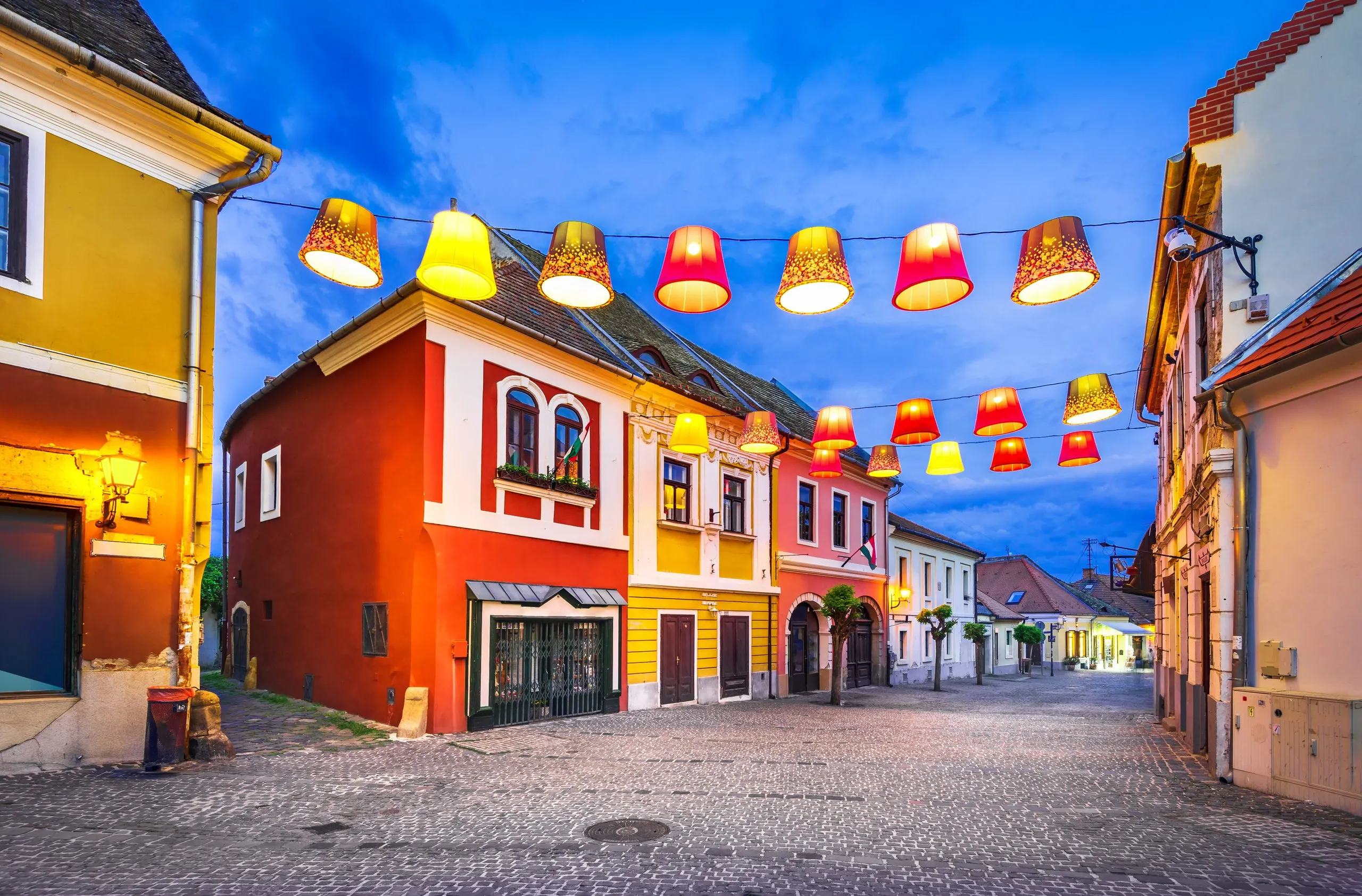
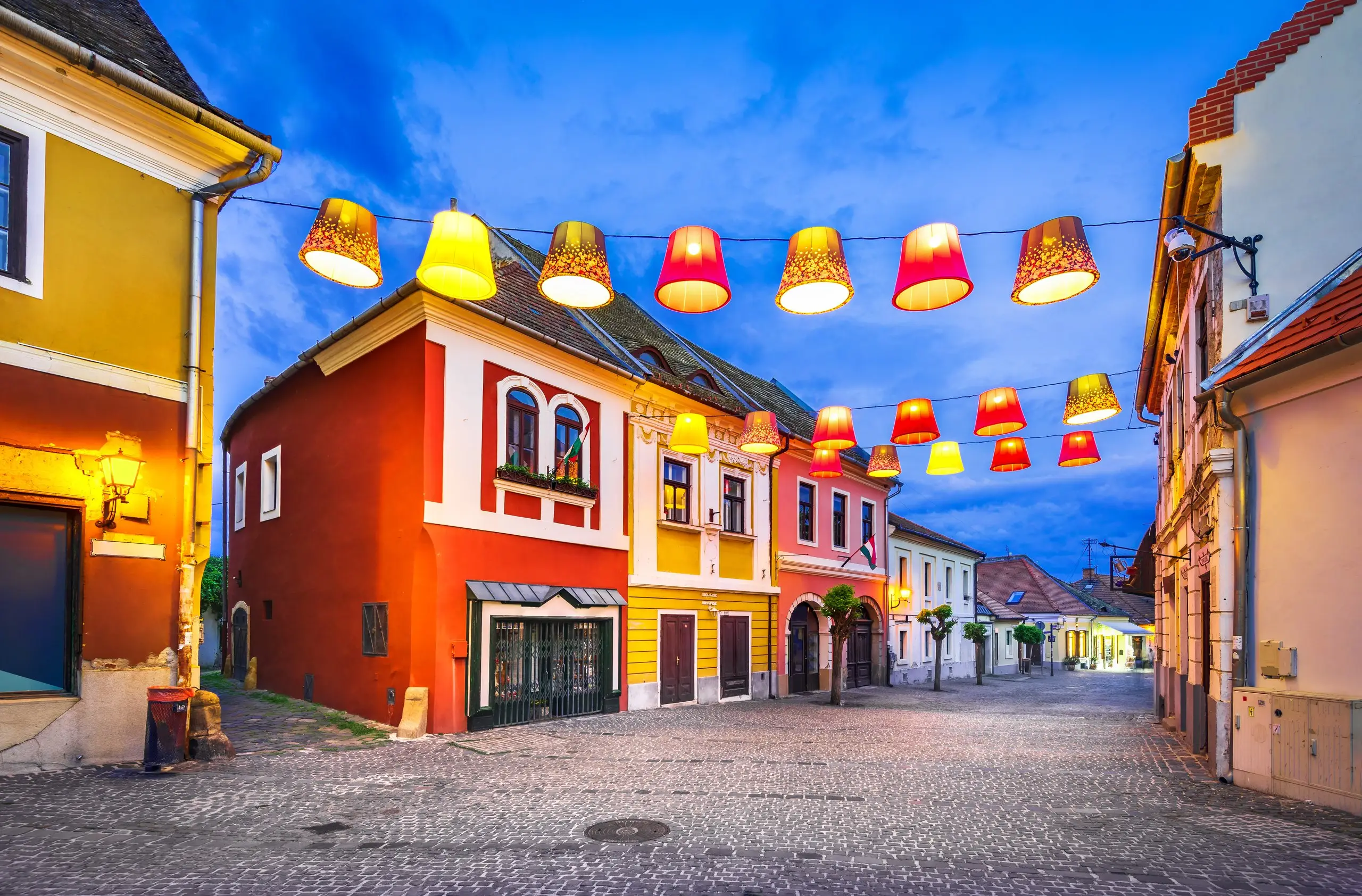
The ochre, red and mustard houses that everyone photographs are that merchant money.
What to actually do in the two hours
Walk up, not along. The main square and the riverfront street are where every visitor is. The lanes climbing the hill behind them are empty, and they are where the town is still a town.
Templom tér, the church square at the top, has the best view over the roofs to the Danube. It takes eight minutes to climb and almost nobody does it.
The Kovács Margit museum is the one indoor thing worth your time — a 20th-century ceramicist whose work is strange, folk-rooted and genuinely moving in places. Small, quick, and better than its tourist-town setting suggests.
The marzipan museum is exactly what it sounds like. Children like it. That is the whole review.
Timing is the entire game
Szentendre at 13:00 on a July Saturday is a coach-party corridor. The same streets at 09:00 or after 17:00 are quiet, the light on the river is better, and you can hear yourself.
If your day is flexible, go early and be back in Budapest for lunch. If it is not, consider a weekday.
The boat, if you have the time
In season there is a river boat from Budapest, roughly an hour and a half upstream. It is slower and more expensive than the train, and it is a genuinely lovely way to approach the town — you come at it from the water, which is how it was built to be approached.
Take the boat up and the HÉV back.
Skanzen is a different day
The Hungarian Open Air Museum (Skanzen) is a few kilometres outside Szentendre: an enormous site of relocated village buildings from every region of the country, with a working narrow-gauge railway around it.
It is excellent. It is also a separate half-day at minimum, and trying to bolt it onto a Szentendre morning means doing both badly. Choose one.
Is it worth a day?
Not a full day. Szentendre is two to three hours, and the honest way to use it is as half of something: Szentendre in the morning and back to Budapest by two, or Szentendre combined with Visegrád and Esztergom further up the Danube Bend, which is a genuine full day and needs a car.
Our Szentendre trip takes the HÉV up, walks the hill streets rather than the souvenir street, and gets you back with the afternoon still in front of you.
Related tours

Would you rather someone local showed you?
Every tour we run is private, and the price is for the group.